castles
Scottish tartans: which one belongs to your clan?
Discover the vibrant history of Scottish tartans and find the perfect design for your clan.
By Highland Explorer Editorial, Highland History Expert - - 3 min read
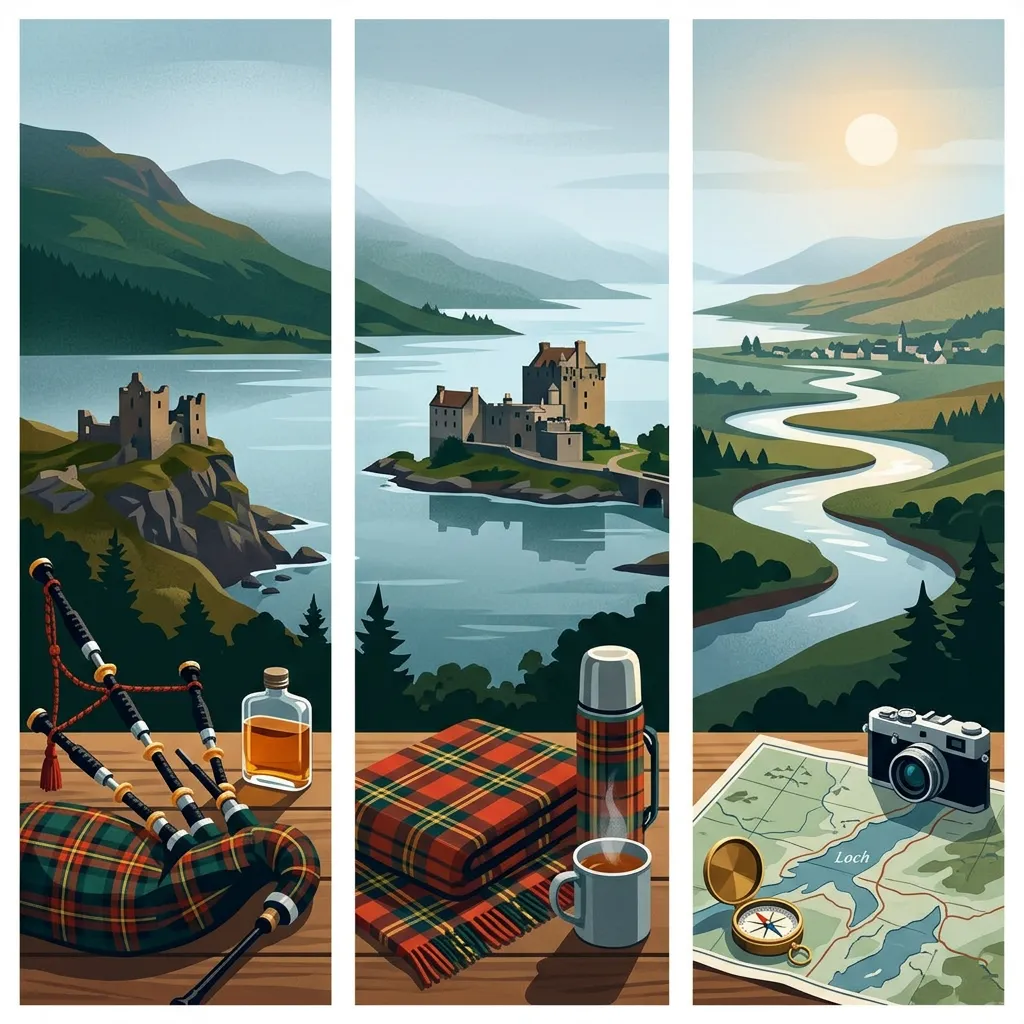
Discovering your Scottish roots is an exciting journey, and realising you may have a connection to a clan opens up a world of tradition, history and belonging. One of the most recognisable symbols of Scottish heritage is the tartan: that distinctive criss-cross pattern of coloured threads woven into wool. But with thousands of tartans in existence, how can you uncover the one that belongs to your clan? Let me guide you through this fascinating piece of your ancestry.
Scottish tartans
Tartans have been part of Scottish culture for centuries, with their origins dating back to as early as 250 AD, as seen in the Falkirk tartan. Over time, tartans evolved from plain dyes to the intricate patterns we know today. By the 16th century, they became a symbol of Highland identity, and following their brief suppression after the 1746 Battle of Culloden, tartans were reborn in the 19th century as emblems of Scottish pride. Each tartan tells a story, connected to clans, families, districts, or even military regiments.
Contrary to popular belief, tartans didn’t originally signify specific clans. Before the 18th century, they were more regional than familial. It wasn’t until the 19th century that weavers formalised clan-specific designs, often at the request of the Highland Society of London. Today, the Scottish Register of Tartans catalogues over 7,000 designs, making it easier than ever to connect with the one that represents your heritage.
If your family name doesn’t have its own tartan, don’t worry. Many families share “district tartans,” which represent regions rather than clans. For example, the Gordons and Murrays may wear patterns tied to their historic territories. Some tartans, like the Black Watch, are universal and can be worn by anyone.
Key Takeaways
- Tartans originate as far back as 250 AD but became Highland symbols in the 16th century.
- Clan-specific tartans were formalised in the 19th century, with over 7,000 designs now catalogued.
- If your surname doesn’t have a tartan, district or universal tartans may still connect you to Scotland.
- The Scottish Register of Tartans is the best resource for finding your family’s design.
- Authentic tartan items can be purchased from trusted weavers and visitor centres across Scotland.
Frequently Asked Questions
How do I find my clan tartan?
Start by searching your surname in the Scottish Register of Tartans or consulting your clan’s society. Many clan websites and resources offer guidance on their traditional tartan patterns. You might also explore how to find your Scottish clan to uncover ancestral links.
Is every tartan linked to a clan?
No, not all tartans are clan-specific. Some are tied to regions or districts, while others, like the Black Watch tartan, are universal. If your family doesn’t have a direct tartan, a district tartan or universal design may suit your heritage.
Exploring Scottish tartans is an incredible way to connect with your heritage and celebrate your roots. Whether you’re tracing your ancestry back to the MacLeods, Campbells, or any other proud clan, your tartan is more than just a pattern - it’s a symbol of your family’s history and place in Scotland’s story.
As you uncover more about your clan, why not plan a visit to your clan ancestral seat? There’s nothing quite like standing where your ancestors once lived, perhaps even dressed in your tartan. This is just the beginning of your journey - Scotland awaits!
Share this story
Enjoyed this read? Share it with fellow travellers on Facebook, X (Twitter), LinkedIn, or send the link to a friend.