hiking
Foinaven: the Wild Northwest Corbett
Discover rugged beauty, untamed landscapes, and unforgettable adventures on Foinaven's remote northwest trails.
By Highland Explorer Editorial, Highland Expert - - 5 min read
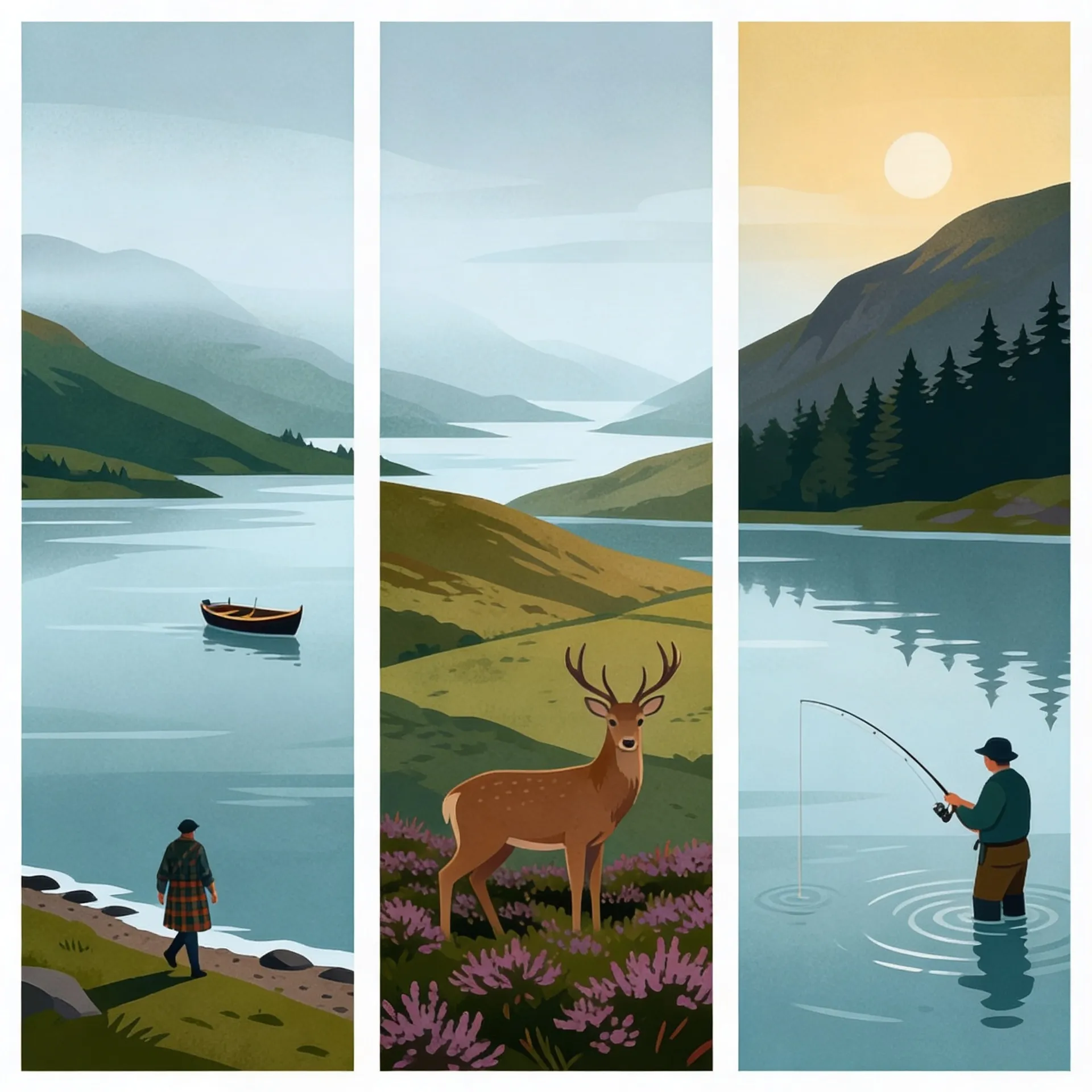
Nestled in the wild northwest of Scotland, Foinaven is a remote and rugged Corbett that rewards the adventurous hillwalker with a true sense of wilderness and some of the most breathtaking views in Sutherland. Rising to 911 metres at its highest point, Ganu Mòr, Foinaven is a vast quartzite massif that offers a challenging and exhilarating day out for those willing to tackle its pathless slopes, long ridges, and boggy approaches. This is not a hill for the faint-hearted, but for those prepared to embrace its remoteness and rugged beauty, Foinaven promises an unforgettable experience.
Known as the “white mountain” due to its sparkling quartzite rock, Foinaven dominates the landscape of the far northwest. Its elongated summit ridge stretches for approximately 5 kilometres and includes a series of striking tops such as Ceann Garbh and A' Cheir Ghorm. This is a place of solitude where few other walkers venture, and on a clear day, the views extend to Cape Wrath, the Atlantic Ocean, and the distant peaks of the northern Highlands. If you’re seeking a strenuous but rewarding day in Scotland’s remotest corner, Foinaven should be at the top of your list.
Route Overview
The standard return route to Foinaven begins just north of Gualin House on the A838, where a small layby provides parking. From here, the walk spans approximately 19.5 to 20 kilometres with a total ascent of 1,040 to 1,100 metres. This is a strenuous outing, taking between 7 and 10 hours depending on fitness and conditions. While the initial approach follows a track, the terrain quickly becomes pathless, with steep grassy slopes, loose quartzite scree, and boggy ground punctuated by lochans. Excellent navigation skills are essential, especially in poor visibility, as the route traverses complex, craggy terrain.
Foinaven is not a Munro, but as the highest Corbett in Sutherland, it holds a special allure for hillwalkers. Its remoteness and rugged beauty set it apart from more accessible peaks. Those unfamiliar with Corbetts can read more about these distinctive Scottish hills in our Corbetts guide.
The Walk
Stage 1: The Approach
Begin your walk by parking in the layby (grid reference NC 246 447) and heading briefly south along the A838 to pick up a track leading west. This track provides a straightforward start, but after a kilometre or so, you’ll leave its relative comfort behind and venture onto pathless and boggy terrain. Aim for the 500-metre contour, using the prominent mast on Meall na Moine as a navigational aid. The lower slopes are wet and uneven, so sturdy, waterproof boots and trekking poles are highly recommended.
Stage 2: The Ascent to Ceann Garbh
The real work begins as you climb steeply towards Ceann Garbh, the southernmost top on Foinaven’s ridge. The ascent is a mix of boggy grass and loose quartzite scree, requiring careful foot placement and frequent pauses to catch your breath. The terrain here is unforgiving, and care must be taken to avoid crags and steep drop-offs. Reaching Ceann Garbh rewards you with your first sweeping views across Sutherland’s dramatic landscape.
Stage 3: The Ridge Traverse
From Ceann Garbh, the route continues north along Foinaven’s undulating ridge. This is a demanding but exhilarating section of the walk, as you navigate a series of minor tops and lochans while surrounded by vast, open scenery. The quartzite underfoot can be loose and uneven, so progress is slower than you might expect. Key features along the ridge include A' Cheir Ghorm and the atmospheric lochans that dot the summit plateau.
Stage 4: Ganu Mòr and the Return
The final push brings you to Ganu Mòr, Foinaven’s highest point at 911 metres. From here, you can savour expansive views that reach as far as Cape Wrath, the Atlantic coastline, and the neighbouring peaks of Ben Hope and Arkle. After soaking in the scenery, retrace your steps carefully along the ridge and descend via your outbound route. Take care to avoid cliffs at around the 400-metre mark by veering left towards safer ground.
Getting There and Parking
Foinaven is accessed from the A838, the main road connecting Durness and Lairg in the far northwest. The starting point is a small layby just north of Gualin House (grid reference NC 246 447). Parking here is free, but spaces are limited, so plan to arrive early, especially during peak walking months. The nearest facilities, including shops and fuel, can be found in Kinlochbervie and Durness, approximately 30 kilometres to the north.
Public transport options are scarce in this remote area. Occasional buses run to Rhiconich and Kinlochbervie from Lairg and Scourie, but schedules are limited, so check ahead with First Bus Highlands if you plan to travel by bus.
Key Takeaways
- Distance: Approx. 19.5-20km return.
- Ascent: 1,040-1,100m total elevation gain.
- Time: 7-10 hours depending on fitness and conditions.
- Terrain: Boggy ground, steep grassy slopes, loose quartzite scree, and rocky ridges.
- Navigation: Essential in poor visibility; carry a map, compass, and GPS.
- Difficulty: Strenuous, suitable for experienced hillwalkers only.
Frequently Asked Questions
How hard is Foinaven?
Foinaven is a challenging walk due to its remote location, pathless terrain, and steep, rocky ascents. It requires good fitness, navigation skills, and experience in wild mountain environments.
How remote is it?
Foinaven is one of the most remote mountains in mainland Scotland. Facilities are sparse, and walkers are unlikely to encounter others on the hill, making self-sufficiency essential.
How long does Foinaven take?
The standard return route takes 7-10 hours depending on fitness and conditions. Allow extra time for navigation and exploring the ridge.
Is Foinaven a Munro?
No, Foinaven is a Corbett, not a Munro. At 911 metres, it falls short of the 914.4-metre threshold required for Munro status.
Foinaven’s rugged beauty and sense of isolation make it a must-visit for experienced hillwalkers seeking the wild heart of Sutherland. For other rewarding hikes in the area, consider the iconic Suilven, the mighty Ben More Assynt, or the striking Ben Hope.
Share this story
Enjoyed this read? Share it with fellow travellers on Facebook, X (Twitter), LinkedIn, or send the link to a friend.