castles
Clan MacLeod: Dunvegan Castle & the Fairy Flag of Skye
Discover the legendary Clan MacLeod, their ancestral castle, and the mystical Fairy Flag of Skye.
By Highland Explorer Editorial, Highland History Expert - - 5 min read
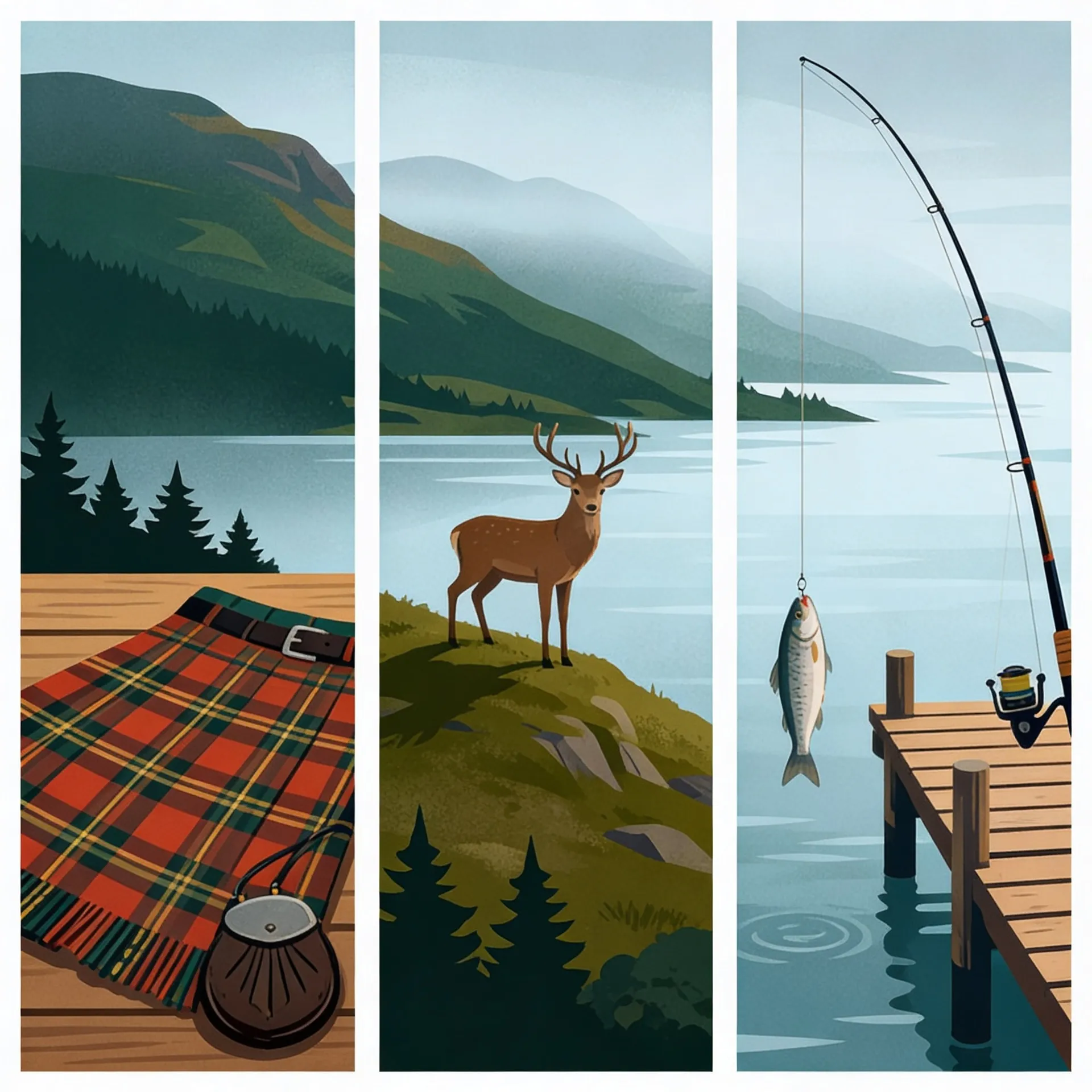
Imagine discovering that your great-great-grandmother was a MacLeod. Perhaps you’ve always felt a pull toward Scotland, a whisper of the wild Skye wind in your dreams. Now you know why: you are part of a story that stretches back centuries, rooted in the rugged Hebridean landscape and bound by an enduring sense of identity. Let me take your hand and guide you through the heart of Clan MacLeod, starting with Dunvegan Castle and the enchanting Fairy Flag. This is your heritage, and it’s waiting to be rediscovered.
The MacLeods are woven into the fabric of Scottish history like a tartan, their roots running deep into the Isle of Skye, Harris, and beyond. Their story begins with Leod, a Norseman who married into Gaelic nobility around 1200. From his sons Tormod and Torquil sprang two distinct branches: Siol Tormod, centred on Skye and Dunvegan, and Siol Torquil, whose influence stretched across Lewis and Raasay. Today, Dunvegan Castle remains a beacon of the MacLeod legacy, standing as the oldest continuously inhabited castle in Scotland.
History & Significance
At the heart of Clan MacLeod’s history lies Dunvegan Castle, perched on its natural rock fortress overlooking Loch Dunvegan. For over 800 years, this castle has been the seat of the MacLeod chiefs, a testament to their resilience and connection to the land. Originally a 14th-century keep built by Malcolm MacLeod, the third chief, it has evolved over the centuries, with each generation adding their mark. One of its most striking features is the Fairy Tower, constructed under Alasdair Crotach, the eighth chief, who was not only a formidable leader but also a patron of the arts.
But Dunvegan isn’t just a stronghold - it’s a treasure trove of clan history. The castle houses the famous Fairy Flag, a silk banner steeped in mystery and legend. Clan lore tells of a fairy gifting the flag to a MacLeod chief, promising miraculous powers. It has reportedly been unfurled in battle to secure victory, and legend says its magic can only be used three times. To date, two uses have been claimed, leaving one miraculous act yet to come. The Fairy Flag is more than an artifact; it’s a symbol of hope and the enduring spirit of a clan whose stories are bound to the island’s windswept shores.
The MacLeods also fostered Scotland’s renowned piping traditions. The MacCrimmons, celebrated as the hereditary pipers of the MacLeods, played a crucial role in preserving the art of pibroch, the classical music of the Highland bagpipe. They trained pipers at their school in Borreraig, under the patronage of Alasdair Crotach. These haunting melodies, echoing through the hills and glens of Skye, are an enduring reminder of the clan’s cultural legacy.
Visiting Today
For anyone tracing their roots to Clan MacLeod, a visit to Dunvegan Castle is a pilgrimage. Open to the public, the castle offers a chance to walk in the footsteps of your ancestors. Inside, you’ll find exhibits showcasing the clan’s history, including the Fairy Flag, portraits of past chiefs, and other treasures. The castle’s gardens, beautifully landscaped, provide a tranquil space to reflect on your connection to this historic place.
Beyond the castle walls, Skye invites exploration of other MacLeod landmarks. Visit the ruins of the MacCrimmon piping school at Borreraig, where generations of pipers were trained. Wander the slopes of the Cuillins, the site of the Battle of Coire Na Creiche, where the MacLeods and MacDonalds clashed in 1601. Marvel at MacLeod’s Tables, two flat-topped hills overlooking the castle, and imagine the fairies dancing there under a moonlit sky.
Getting to Dunvegan is straightforward, with parking available at the castle. You can explore more about visiting the castle in our Dunvegan Castle visiting guide. If you’re travelling further afield on Skye, consider stopping by the Skye Museum of Island Life for more insights into Highland culture or visiting Talisker Distillery for a taste of local whisky.
Key Takeaways
- Dunvegan Castle: The seat of Clan MacLeod for over 800 years and the oldest continuously inhabited castle in Scotland.
- The Fairy Flag: A legendary silk banner said to hold miraculous powers, now housed within the castle.
- MacCrimmon pipers: Hereditary pipers to the MacLeods, who shaped the tradition of Highland bagpipe music.
- MacLeod’s Tables: Iconic flat-topped hills linked to clan folklore and fairy legends.
- Skye landmarks: Explore Borreraig, the Cuillins, and other sites that hold MacLeod history.
- Global diaspora: Many MacLeods emigrated after the Jacobite risings, but Skye remains their ancestral heartland.
For more on this area, see our guide to castles on Skye.
Frequently Asked Questions
What is the Fairy Flag of Dunvegan?
The Fairy Flag is a silk banner housed at Dunvegan Castle, associated with legends of miraculous powers gifted by a fairy to the MacLeod clan. It is said to bring victory in battle or aid fertility, but its magic can only be used three times.
Where is the Clan MacLeod seat?
Dunvegan Castle on the Isle of Skye is the ancestral seat of Clan MacLeod. It has been the continuous residence of the clan chiefs for over 800 years.
Can you visit Dunvegan Castle?
Yes, Dunvegan Castle is open to visitors. It offers exhibits on clan history, gardens, and access to the legendary Fairy Flag. Check hours and ticket information on the clan ancestral seats page.
To walk the halls of Dunvegan Castle or stand beneath MacLeod’s Tables is to step into history, into your history. Whether you’re gazing at the Fairy Flag or listening to the echo of bagpipes across the Cuillins, you’ll feel the unbroken connection to this land and its people. This journey is not just about visiting a place; it’s about finding yourself within it. Welcome home.
Share this story
Enjoyed this read? Share it with fellow travellers on Facebook, X (Twitter), LinkedIn, or send the link to a friend.