quick-fire
Geography of the Scottish Highlands: Key Facts
Boundaries, landforms, geology and climate explained
By Highland Explorer, Editorial Team - - 4 min read
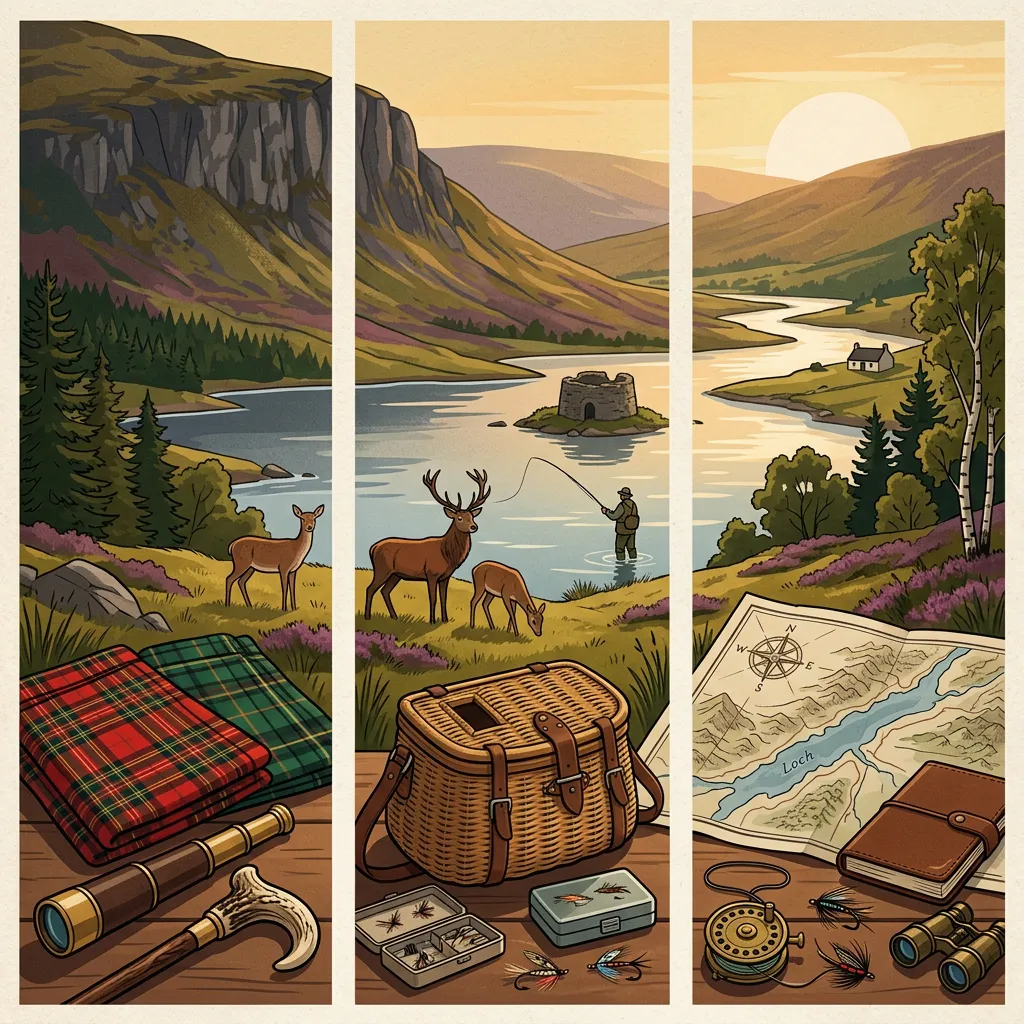
Boundaries and Size
Geographically, the Scottish Highlands are defined as the land north-west of the Highland Boundary Fault, a major geological line running from Helensburgh on the Firth of Clyde to Stonehaven on the North Sea. Crossing this line marks a clear and immediate change in landscape.
The Highlands cover around 26,000 square kilometres (nearly 10,000 square miles), making them the largest single geographical region in Scotland and one of the most extensive rural landscapes in the UK.
Landforms and Structure
The Highlands form the highest ground in the United Kingdom, dominated by rugged mountains, plateaus, and long glens. Key mountain areas include the Grampian Mountains and the Northwest Highlands, which contain many of Scotland's most dramatic peaks.
The landscape has been heavily shaped by Ice Age glaciation. Classic features include U-shaped valleys, hanging glens, corries, and over-deepened basins, many of which later filled with water to become lochs.
One of the most important geographical features is the Great Glen, a long, straight, fault-aligned valley running from Fort William on the west coast to Inverness on the east. It links a chain of lochs, including Loch Ness, and effectively splits the Highlands in two.
Rocks and Geological History
Much of the Highlands is built on extremely ancient rock formations dating back to the Precambrian and Cambrian periods. Some of the oldest rocks, such as Lewisian gneiss in the far north-west, are nearly 3 billion years old, among the oldest exposed rocks in Europe.
In contrast, Torridonian sandstone, laid down around 1,000 million years ago, forms the bold, layered mountains of Wester Ross, including the iconic Torridon Hills, known for their steep profiles and reddish colouring.
Coasts, Lochs and Islands
The western Highlands have a deeply indented, fjord-like coastline, shaped by glacial erosion and rising sea levels. This coast is characterised by long sea lochs, peninsulas, and offshore islands.
Many of Scotland's islands lie off the Highland coast, including much of the Inner and Outer Hebrides, giving the region one of the most complex coastlines in Europe.
Inland, the Highlands contain numerous long freshwater lochs, such as Loch Ness, Loch Lomond (on the Highland side of the fault), and Loch Shiel. Many of these lochs follow ancient fault lines or glacial troughs, running straight and deep through the landscape.
Climate and Weather
The Highlands experience a cool, wet, maritime climate influenced by Atlantic weather systems. The west Highlands are among the wettest areas in Europe, while the east Highlands are noticeably drier and more sheltered.
Because of the rugged terrain, weather conditions can change rapidly over short distances, with rain, wind, cloud, and sunshine often occurring within the same day—an important consideration for travel and route planning.
Scottish Highlands Geography FAQs
Where do the Scottish Highlands officially begin?
There is no marked boundary on the ground, but geographically the Highlands begin north-west of the Highland Boundary Fault, roughly beyond places like Helensburgh, Callander, and Stonehaven.
Are the Highlands all mountainous?
No. While mountains are a defining feature, the Highlands also include extensive moorland, coastal areas, forests, farmland, river valleys, and islands.
Why are there so many lochs in the Highlands?
Most Highland lochs occupy valleys carved by glaciers or follow ancient geological fault lines, allowing water to collect in long, deep basins.
Why does the west Highlands get more rain than the east?
Moist Atlantic air rises over the western mountains, cooling and releasing rainfall. By the time weather systems reach the east, much of the moisture has already fallen.
Are the Highlands one continuous mountain range?
No. The Highlands are made up of several distinct mountain groups separated by glens, lochs, and low-lying corridors like the Great Glen.
Why does the landscape feel so dramatic compared to southern Scotland?
The combination of ancient rock, repeated glaciation, steep relief, and sparse settlement has left the Highlands with a raw, large-scale landscape that has changed little in modern times.
Share this story
Enjoyed this read? Share it with fellow travellers on Facebook, X (Twitter), LinkedIn, or send the link to a friend.